If you’re planning a new store or upgrading your existing fit-out, one of the first questions is: how much do shelves for shops cost?
In 2026, shelves for shops in Australia starts from around $81.40 + GST for a basic single-sided gondola bay and $146.79 + GST for a basic double-sided bay.
However, these entry-level prices only cover the base shelving configuration. Most retailers also require additional shelves, accessories, freight and installation.
At Mills Shelving, we believe shelving is more than a store fixture; it’s an investment in how your business operates. The right system should maximise retail space, improve product presentation and support long-term growth, not simply offer the lowest upfront price.
This guide explains what you can expect to pay, what influences the final cost, and how to budget for shelving that delivers long-term value.
The table below shows the current starting prices for common shelving systems available from Mills Shelving.
| Shelving Type | Typical Starting Price (Ex GST) |
| Single-sided gondola bay | From $81.40 |
| Double-sided gondola bay | From $146.79 |
| Wire shelving bay | From $130.59 |
| Cool room shelving | From $301.95 |
These figures are a useful starting point, but they don’t represent a complete, shop-ready shelving system.
In our experience, the most common mistakes we see are businesses comparing individual bay prices between suppliers without checking what’s actually included or considering the long-term differences between new and used shelves for shops.
A lower advertised price may only cover a basic starter bay, while another quotation may include additional shelves, accessories or a different configuration altogether.
So, basically, comparing complete systems rather than individual components usually provides a far more accurate picture of the total investment.
For example, a standard wall bay typically includes the base shelf only. Most retailers add multiple upper shelves, ticket holders, shelf dividers, hooks or wire accessories depending on the products being displayed.
As a result, the final cost is almost always higher than the advertised entry price.
No two retail stores require the same shelving. Several factors influence the final project cost, with some having a much bigger impact than others.
The overall shelving layout is usually the biggest pricing factor.
Your quotation will depend on:
Single-sided shelving is generally installed against walls, while double-sided shelving is used to create shopping aisles. Larger stores naturally require more bays, increasing both equipment and installation costs.
Larger shelving generally provides more display space but also increases material, freight and overall project costs.
The final price depends on factors such as shelf height, width, depth and the number of shelf levels required. Rather than choosing the largest configuration available, we recommend selecting shelving that suits your product range and merchandising strategy.
Understanding how to choose the best shelves for your shop can help you balance product presentation, customer flow and long-term flexibility.
For example, a boutique selling cosmetics or giftware may only require shallow shelving, while supermarkets, hardware stores and convenience stores often benefit from deeper shelves designed to support larger or heavier products.
Choosing the right size helps maximise both retail space and long-term value.
“We always encourage retailers to choose shelving based on the products they sell rather than trying to maximise the number of shelves. The right shelf depth and spacing makes merchandising easier, keeps products looking organised and creates a better shopping experience.”
Neil Webster, CEO, Mills Shelving
The shelving itself is only part of the system.
Many retailers also include accessories to improve product presentation and day-to-day operation, such as:
While these components are relatively inexpensive individually, they can make a noticeable difference across an entire store.
For example, fitting four or five shelves across dozens of bays quickly increases the total number of ticket strips, dividers and merchandising accessories required.
Freight and installation are often overlooked when budgeting for shelves for shops.
Delivery costs vary depending on your location, order size and site accessibility, while installation is influenced by factors such as the number of shelving bays, store layout and whether existing shelving needs to be removed.
Planning for these costs upfront helps avoid unexpected expenses later in the project.
As for the installation, professional installation generally ranges between $75 and $125 per hour (ex GST), although every project is different.
To make pricing easier to understand, the examples below illustrate what a typical equipment budget might look like.
These estimates are equipment only and exclude freight and installation.
| Shop Type | Typical Equipment Budget (Ex GST) |
| Small boutique | $340–$380 |
| Convenience store | $900–$1,150 |
| Mid-sized retail shop | $1,400–$1,900 |
These examples assume a standard shelving configuration with multiple shelves and common retail accessories rather than the minimum advertised shelving bay.
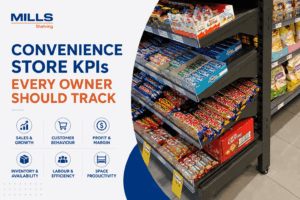
For convenience store operators, shelving costs should also be considered alongside how effectively the space performs. Tracking convenience store KPIs such as sales per square metre, inventory turnover and category performance can help identify where shelf space is delivering value and where the layout may need adjusting.
Larger stores, supermarkets and retailers requiring custom layouts should expect higher budgets depending on the number of aisles and accessories required.
Used shelves for shops can appear attractive because of the lower upfront cost, but it’s worth considering the long-term implications before making a decision.
| New Shelving | Used Shelving |
| Consistent appearance across the store | Condition varies significantly |
| Easy to expand with matching components | Matching parts can be difficult to source |
| Manufacturer warranty | Usually sold without warranty |
| Greater flexibility for future layout changes | Limited sizes and configurations available |
| Better presentation for customers | May show wear, scratches or damage |
For temporary stores or very limited budgets, used shelving may be a practical option.
However, for retailers planning to operate long term, new shelving often provides better value. It creates a more consistent appearance, allows future expansion and reduces the risk of compatibility issues when additional shelving is needed later.
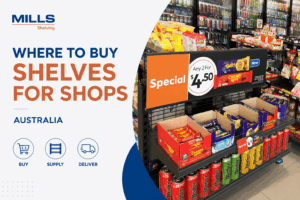
Once you have a realistic budget in mind, the next step is deciding where to source your shelving and what to compare between suppliers. Our guide on where to buy shelves for shops in Australia explains the main buying options and what to look for before choosing a supplier.
When requesting a quotation, providing the following details will also help you get a more accurate estimate:
Even a simple sketch of your shop layout can help identify the most suitable shelving configuration and minimise unnecessary costs.
If you’re unsure where to start, we can also help recommend a layout based on your available floor space and the products you intend to display.
The best shop shelving isn’t simply the cheapest; it’s the system that makes the most of your retail space, supports efficient merchandising and continues to perform as your business grows.
If you’re planning a new store or upgrading your existing fit-out, contact Mills Shelving for a tailored shelving recommendation and project estimate.
We’ll help you choose a solution that suits your products, layout and budget, so you can invest with confidence.