Start with the space your everyday lines need to last until the next refill. The width left over is your first seasonal allocation. A percentage of the whole bay can be misleading: a Christmas tin may fit neatly where two rows of crackers stood, yet leave the crackers empty halfway through Saturday.
Pick the shelf you intend to change and count each product’s facings, meaning the number of packs shoppers see side by side. Count how many sellable packs fit behind each facing, including the front pack. Measure the actual pack on the shelf with its price strip and dividers in place. A carton quantity tells you little about usable depth.
For each staple, take sales over a busy interval between two realistic refills. Add a small allowance based on the variation you actually see. Divide those units by the number that fit in one facing and round up. Check your till figures against an end-of-shift shelf count: a line that sold out before lunch will understate afternoon demand. The Australian Government’s inventory management guide explains how stock records and physical checks work together.
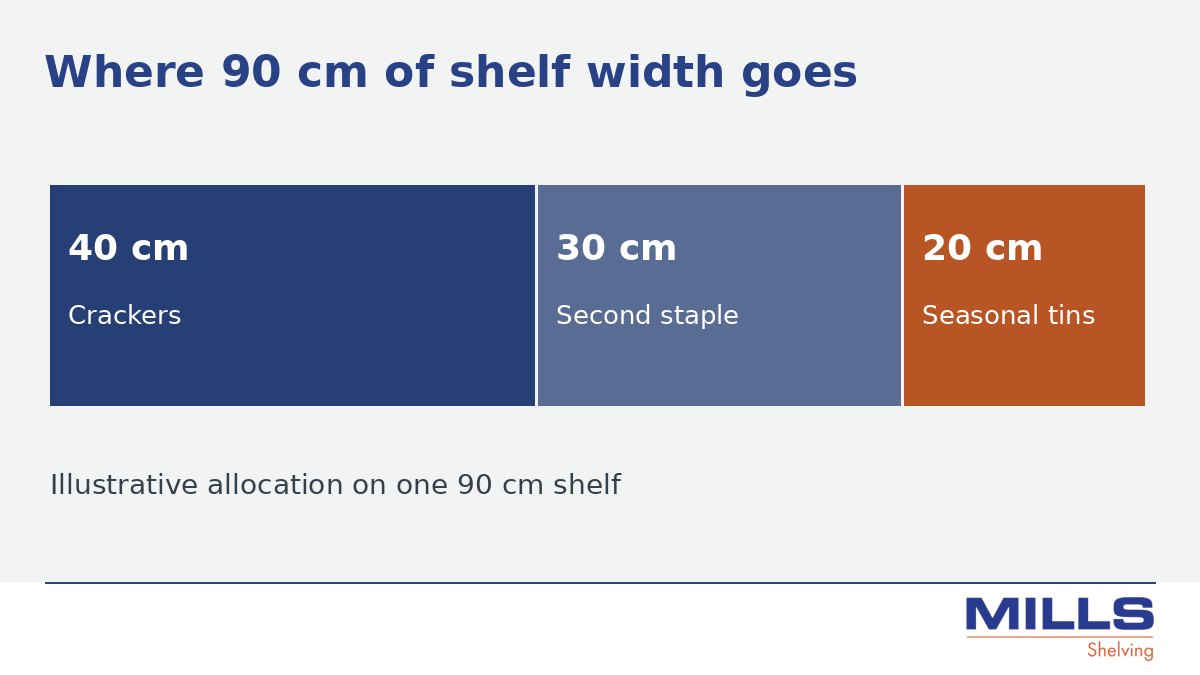
Suppose a cracker packet is 10 cm wide and fits six deep. You expect to sell 20 packets between Friday afternoon and the next refill and want four spare. That requires four facings, or 40 cm. A second everyday line needs 30 cm, leaving 20 cm. A 9 cm gift tin fits two across, subject to actual clearances. Those figures illustrate the method for one shelf; repeat it for shelves of different depths.
If the tins are 12 cm wide, the same gap takes only one facing. Before shifting the everyday stock, try another shelf or a narrower seasonal pack. Our guide to displaying items on gondola shelves covers grouping products so customers can still find the regular range.
Track extra units sold across the whole display. Moving a tin from one end of the aisle to the other can make the new spot look successful while total tin sales stay flat. For a short trial, record total unit sales, gross profit per unit, markdowns and times the neighbouring staples were unavailable. Compare similar trading days and note any price promotion.
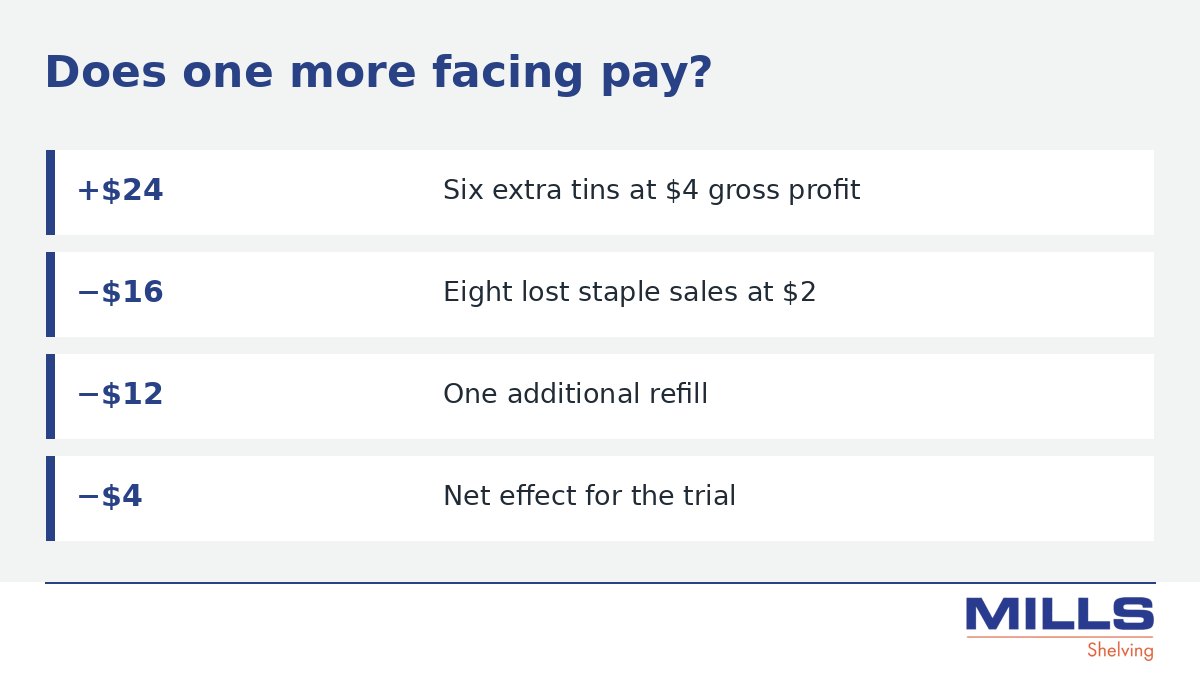
Suppose an extra facing sells six additional tins at $4 gross profit each, while the narrower staple display costs eight sales at $2 gross profit each. That leaves $8 before extra refill labour or markdowns. If a second daily refill costs $12, the wider display is already $4 behind. Count genuine lost sales where you can, and use a range if shoppers may have bought substitutes.
Set a review date before the last reorder. Compare stock on hand with likely sales through the final full-price day. A half-empty bay can mean strong sales, late deliveries or too much space for the remaining range. Check the stockroom before moving a shelf. Restore staple facings if the next weekend refill cannot cover them, even if the promotion has another week to run.
Photograph the final layout and record the usable width, stock left and refill times for next season. If the same pinch point recurs, compare the shelf depths and bay configurations in our gondola shelving range. Our guide to making better use of an existing gondola also covers adjustments worth testing before budgeting for another bay.